


Behind

The

Shell

A Drum is Simple

Making one sound like you isn't.
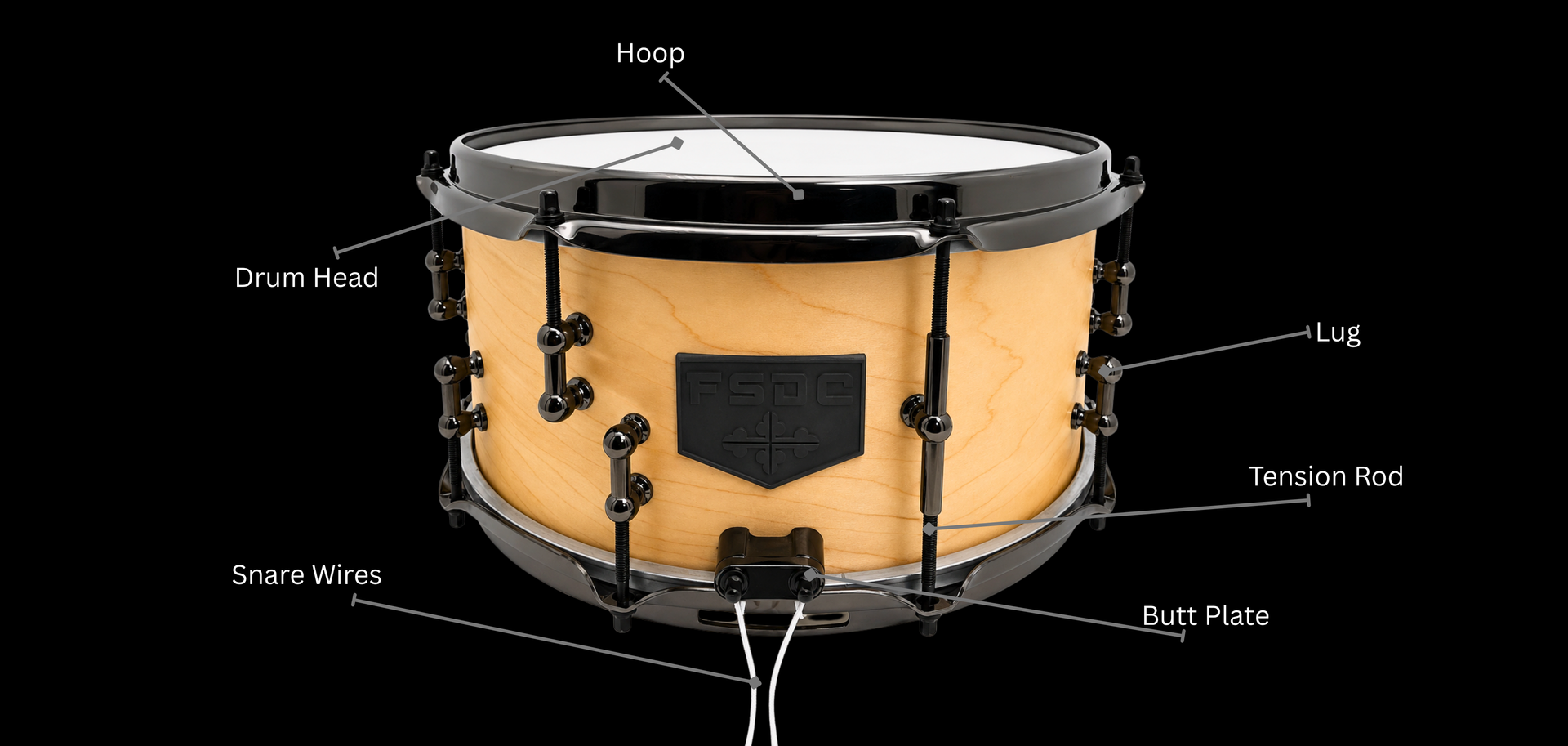

Overview Diagram

Six parts do the work on the outside of a snare drum. None of them are complicated on their own, but each one is a decision, and every decision costs you something somewhere else. 

Pitch & feel

The membrane you actually hit. Pitch lives here, not in the wood. A single-ply head is bright and open. A coated or two-ply head trades some ring for a shorter, fatter note and a softer stick feel. Heads are also the cheapest thing on the drum, which is why they're the first thing to change before you blame the instrument.
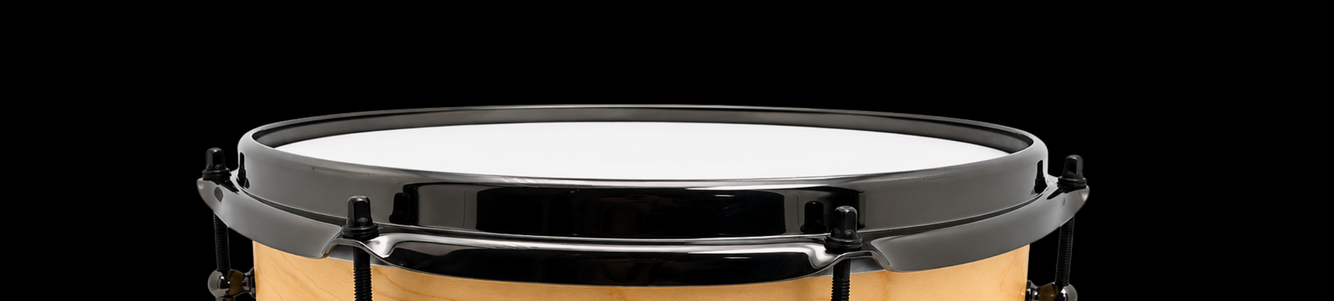
Attack & rimshot

The ring that clamps the head down to the shell. Triple-flange hoops are lighter and flex slightly, so the drum rings open and forgives a little. Die-cast hoops are heavier and stiffer — they focus the attack, dry out the ring, and make a rimshot crack instead of clang. Same shell, two different personalities.
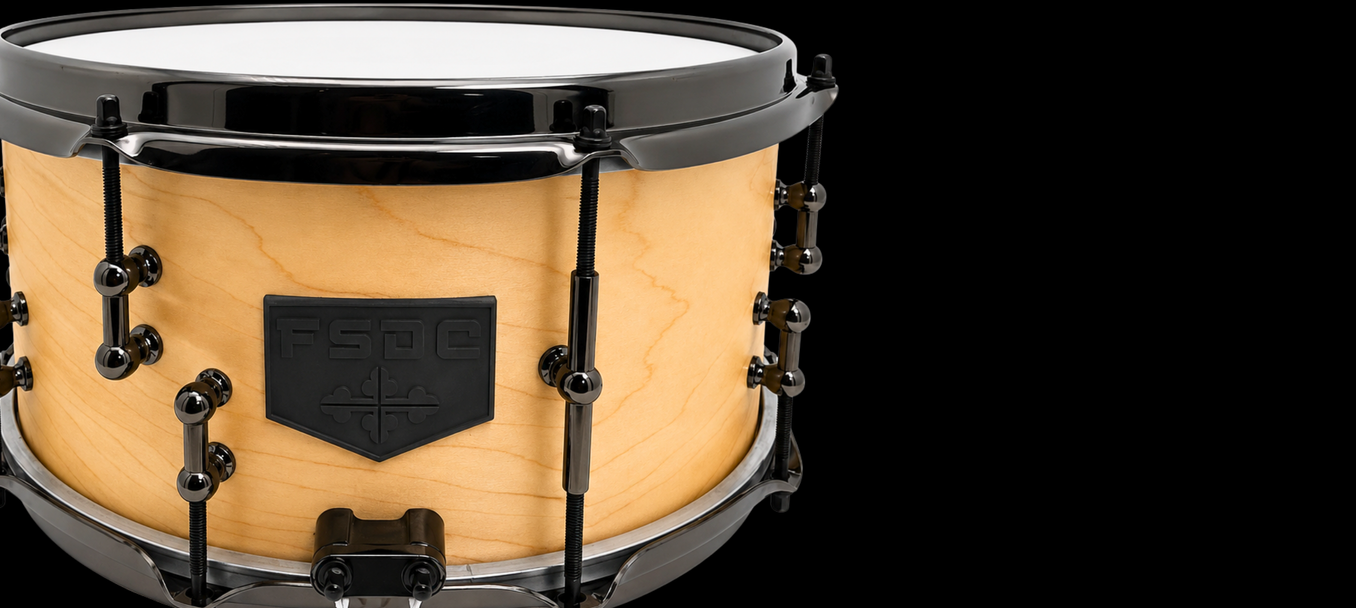
Mass on the shell

The housings the tension rods thread into. Every lug is metal bolted to wood, and mass on a shell shortens sustain. Fewer, lighter lugs let the shell breathe and ring longer. More lugs give you finer control over head tension around the circle. That's a real trade, and it should be yours to make — not a spec you inherit.
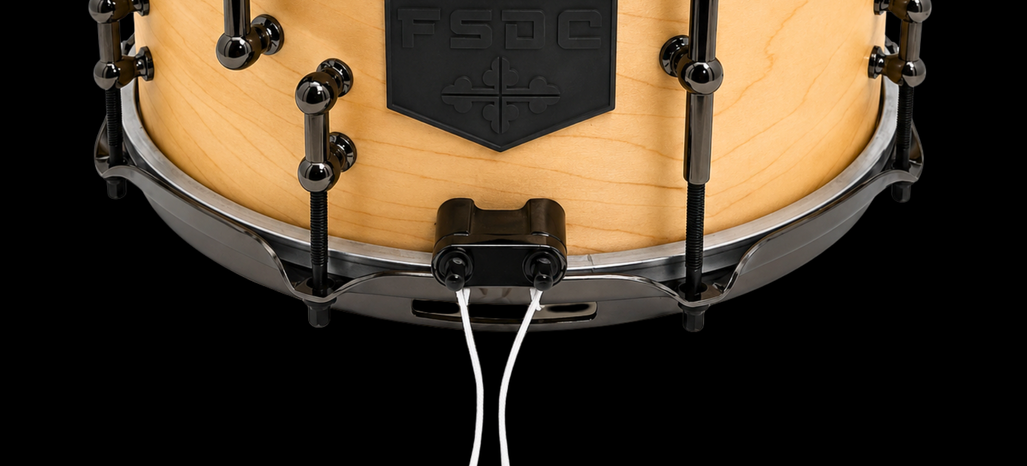
Wire anchor

The screws that pull the hoop down against the head. Each one is a quarter-turn of pitch. Even tension across all of them is what makes a drum speak as one note instead of an argument between eight. Most drums that get called bad are just drums that were never tuned evenly.
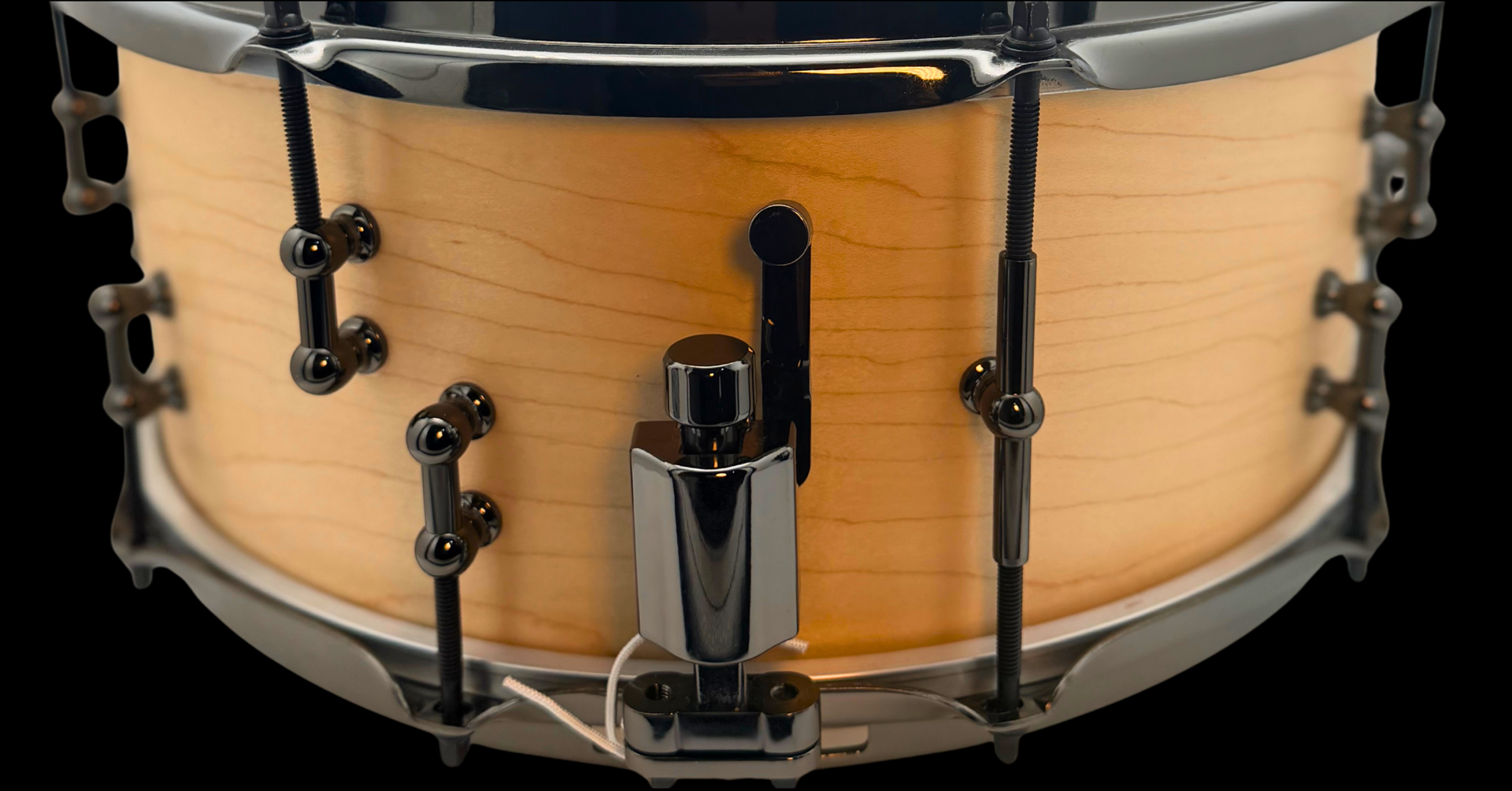
Snare engagement

The lever on the side of the drum that engages and releases the snare wires. Flip it down and the wires drop off the bottom head — the drum becomes a small tom, dry and pitched, with no rattle. Flip it up and the wires pull tight against the head and the drum becomes a snare again.
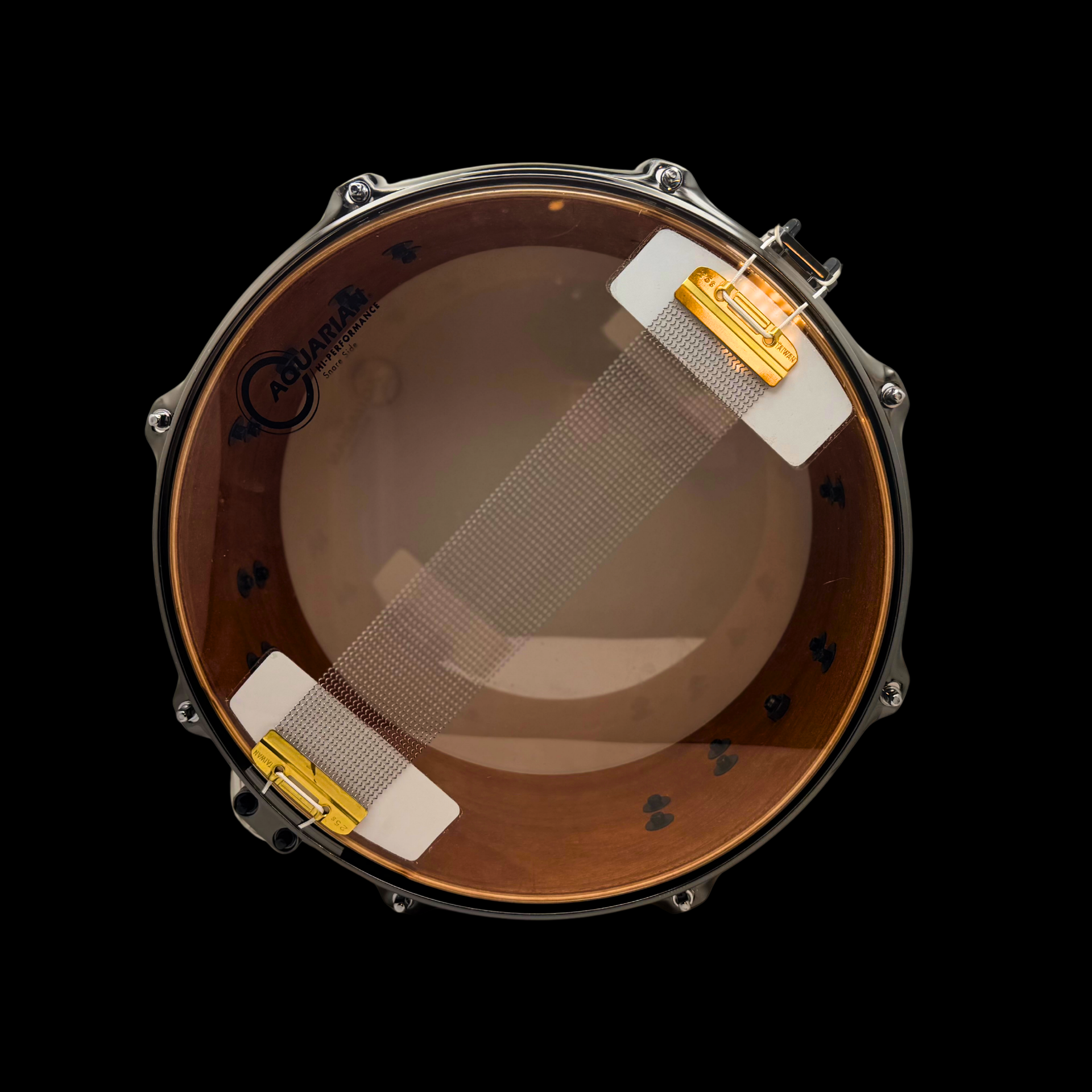
Response & sizzle

Coiled wires stretched across the bottom head — the cords visible here are what hold them under tension. They're the entire reason a snare is a snare. Tighter reads crisper and drier with less ghost-note detail; looser reads fatter and buzzier and picks up everything. The throw-off on the far side releases them completely when you want a small tom.

Inside the Shell

Three decisions made before the drum was ever assembled.

Attack, sustain, and how much of the shell you hear

A sharper edge — a narrow, defined peak, often a 45-degree cut — puts less wood in contact with the head. Less contact means less energy bleeding into the shell, so more of it stays up top where it's loud. You get more attack, more cut, more ring, more sustain, and a brighter overall voice. It's also more forgiving of a slightly imperfect head seat, because the contact line is narrow and consistent.


A rounder edge — a wider, softer radius, sometimes called a vintage or round-over edge — puts more wood against the head. More contact means more energy crossing into the shell. You get a warmer, darker, shorter note with more wood character and less ring. It sits back in a mix instead of jumping out of it.

Body, low end, and sensitivity

Depth is the height of the shell, and it's the lever most players reach for first because it's the easiest to understand: deeper drums have more air in them.


More air means more body. A deeper snare gives you a fuller, lower, more powerful backbeat with more weight behind the note. A 13×7 hits like a truck. It fills a room without much effort and it sounds authoritative on its own.


The cost is sensitivity and speed. A deeper drum takes more energy to fully excite, so quiet playing — ghost notes, brush work, light rim detail — doesn't come back as clearly. There's a slight lag in how quickly the drum responds. The larger air column also takes a moment longer to settle, so the note is a bit slower to develop and slower to get out of the way.


A shallower drum reverses all of it. Less air, less body, less low end — but it speaks the instant you touch it. Ghost notes come back articulate. Fast passages stay defined instead of blurring. The note develops and clears quickly, which is why shallow piccolo-depth snares cut so well in dense arrangements.


The honest framing is that depth is a power-versus-response trade, and where you want to land depends entirely on what you play. A rock drummer laying down a hard 2 and 4 wants body. A funk or gospel player living in the ghost notes wants response. Somebody doing both wants a compromise, usually in the 5.5 to 6.5 inch range, which is exactly why that's the most common depth range on earth.


One thing depth does not control: pitch. A deeper drum is not a lower drum. Pitch is head tension and diameter. Depth changes how much low-end body sits underneath the pitch you tuned to, which is a different thing, and confusing the two is one of the most common mistakes in drum shopping.

Resonance, projection, and the drum's fundamental voice

Depth is the height of the shell, and it's the lever most players reach for first because it's the easiest to understand: deeper drums have more air in them. More air means more body. A deeper snare gives you a fuller, lower, more powerful backbeat with more weight behind the note. A 13×7 hits like a truck. It fills a room without much effort and it sounds authoritative on its own.


A shallower drum reverses all of it. Less air, less body, less low end — but it speaks the instant you touch it. Ghost notes come back articulate. Fast passages stay defined instead of blurring. The note develops and clears quickly, which is why shallow piccolo-depth snares cut so well in dense arrangements.

Shell stability, edge integrity, and how much body a thin shell keeps

Left unsupported, a thin shell will eventually pull slightly out of round, and the bearing edge — that perfectly level surface everything depends on — goes with it. Once the edge is no longer flat, the head can't seat evenly, and the drum stops tuning cleanly. It's gradual and it's the reason a lot of older thin-shell drums are difficult instruments today.


A reinforcement ring solves that by adding hoop strength exactly where the load is. The ring holds the shell round and holds the edge true, decade after decade. This is not a subtle benefit and it's not a marketing point — it's the difference between a drum that tunes the same in year twenty as it did in year one, and a drum that slowly becomes a project.

Buy Tickets